

In our previous article, we explored the evidence behind making tranexamic acid (TXA) more affordable and accessible, and the barriers preventing women from accessing this life-saving treatment for postpartum haemorrhage (PPH).
But how can these barriers be overcome?
In a recent webinar, experts from Jhpiego and the London School of Hygiene & Tropical Medicine (LSHTM), alongside speakers from the World Health Organization (WHO), the Ministry of Health in the Democratic Republic of Congo (DRC) and the US Pharmacopeia, discussed practical solutions to make quality-assured TXA more affordable and reliably available where it is needed most.
1. Buying a single 10 ml ampoule reduces the cost of treating PPH and simplify emergency care easier
The way TXA is packaged can affect both its cost and how easy it is to give during an emergency.
For PPH treatment, the WHO recommended dose is 1 gram and comes in a 10ml ampoule.
Yet many facilities in LMICs only stock 5 ml ampoules, making healthcare workers use two 5 ml ampoules to give the full dose.
Naoko Doi, Market Access Team Lead at Jhpiego, said: “A single 10 ml ampoule provides the full dose in one container, which can make preparation and administration simpler in an emergency.
“Our analysis shows that one 10 ml ampoule often costs less than two 5 ml ampoules, potentially making it better value.”
In an online survey shared through the International Federation of Gynaecology and Obstetrics (FIGO), a consortium member of Jhpiego’s Amplifying Access to Life-saving Medicines and Tools project (AMPLI-PPHI), 91% of respondents preferred using 10 ml ampoules to treat PPH. They found them easier to prepare and use, reduced the risk of dosing errors and could be used more quickly during emergencies.
2. Countries could save money by combining TXA volumes across the country
In some countries, essential medicines like TXA are bought by individual regions, provinces, counties or even health facilities themselves. This can mean that the total national demand is split across many smaller orders.
Doi said: “Combining these needs and coordinating procurement at the national level in a periodic cycle could give governments clarity over how much TXA the country needs and could leverage the pooled purchasing power.
“For example, in Kenya, maternal health drugs have historically been procured at county level. Bringing demand together nationally could create a much larger order than any individual county could make. This does not guarantee a lower price. But it could give governments a stronger position when negotiating with suppliers.”
3. African manufacturing could help make TXA supply more reliable
Supporting manufacturers in Africa is not simply about trying to make TXA cheaper, but having a reliable supply of it, advises Beth Yeager, Director of Market Access and Health Systems Strengthening, US Pharmacopeia.
Yeager said: “Affordability must work for both sides: countries must be able to buy TXA, and manufacturers must be able to supply it sustainably.
The COVID-19 pandemic showed how quickly global health supply chains can be disrupted. Lessons learned from this crisis, revealed how countries prioritised their own vaccine supply, which left other countries without manufacturing capacity with shortages.
“Africa-based manufacturers could increase supply security”, says Doi. “Having manufacturers that are prioritising the African market means the supply of these health products could be more stable and more available.
“However, having manufacturers based in the region does not remove this risk entirely. African manufacturers may still depend on imported ingredients and other materials, so global supply chain problems can still affect them.”
Unitaid is supporting manufacturers including Tasa Pharma in Kenya and Fidson Healthcare in Nigeria to meet the regulatory requirements needed to supply quality-assured TXA.
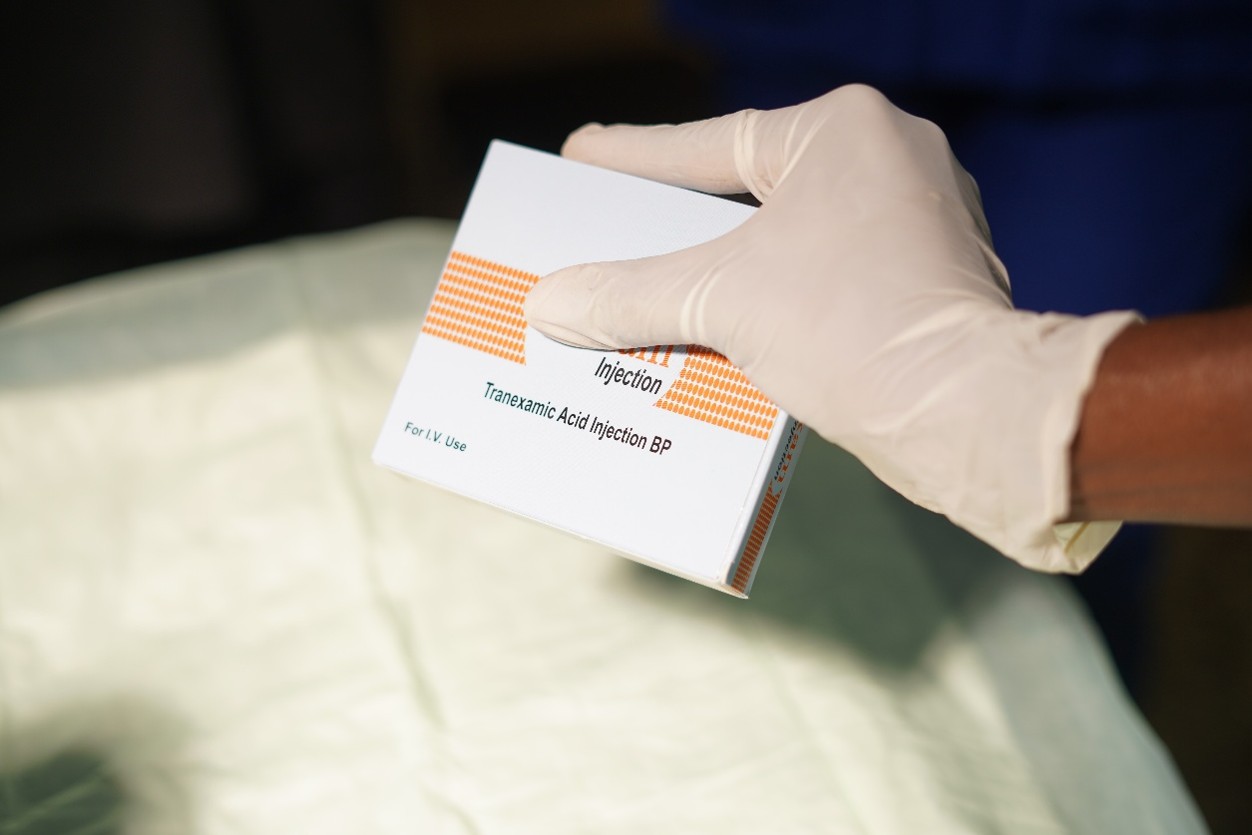
A clinician prepares tranexamic ampoules for injection. Aanuoluwapo Olaleye © / LSHTM.
Use price benchmarking to help LMIC manufacturers enter the TXA market
As important as technical assistance to meet regulatory requirements is that TXA manufacturers price their products just right – affordable for customers and sustainable for their business.
Doi said: “Price benchmarking is especially useful for TXA manufacturers deciding on how to price TXA when entering new markets.
“This gives manufacturers a price that would make them competitive.
“And manufacturers entering a new market may not know what prices they need to offer to compete. This is where price benchmarking can help.”

AMPLI-PPHI has analysed price data of quality-assured TXA from multiple distribution channels, including the institutional market dominated by UN buyers and open markets that procure TXA through distributors.
The benchmarking work led by AMPLI-PPHI was primarily designed to help African manufacturers enter the market competitively, while generating savings for countries.
For example, a Kenyan manufacturer that currently sells TXA only in Kenya may not know what price it needs to offer to compete for contracts with organisations such as UNICEF or UNFPA.
This does not mean that the benchmark is a fixed price that every country would pay. It is a reference point to help manufacturers understand the market and help them assess whether their price would be competitive in their target markets
What’s next?
Turning evidence into access requires national leadership
Dr Chantal Lusikila, Head of the Family Health and Specialized Care Division within the Ministry of Public Health in the DRC, said: “In the DRC, the Ministry of Health is integrating TXA into national policy so maternal health facilities have the full PPH prevention and treatment package.”
“Demand is not created by evidence alone. It requires policy adoption, financing, provider training and procurement systems that can deliver the drug consistently,” added Dr Deogratias Chibinda Ntale, AMPLI-PPHI’s Country Program Manager in the DRC.
An alternative route to TXA could expand reach if evidence supports it
The I’M WOMAN Trial is assessing if an alternative way to give TXA – into a muscle rather than a vein – is as effective.
Dr Katharine Ker from the WOMAN Trials team said: “Currently, TXA is given intravenously to manage postpartum bleeding, but this route can be slow in an emergency and there may be limited staff available to administer it.
“If intramuscular TXA proves to be just as effective, it could save many more lives by reaching women who give birth outside hospitals or where intravenous treatment isn’t possible.”

A doctor in Nigeria prepares a drape to collect blood used to measure postpartum blood loss. Credit: WOMAN Trials, LSHTM.
A call to action
TXA needs to be available, so countries have the full PPH treatment bundle
The WHO first-response bundle for PPH treatment was launched in 2023. TXA was incorporated into WHO guidelines after the WOMAN Trial evidence in 2017 proved that early TXA could save lives when given within three hours of the bleeding onset.
Dr Allisyn Moran, Unit Head of Sexual Reproductive Maternal and Newborn Health at WHO said: “If a facility does not have TXA, it does not have the full treatment bundle for postpartum haemorrhage.
“The fact that TXA has been on the WHO essential medicines list since 2011 and updated to 2019 as a core medication for treating PPH, should encourage more ministries of health to advocate for using TXA in their countries.”
To learn more, watch the webinar recording of Breaking Down Barriers: How to Make TXA Affordable and Available to All Women Diagnosed with Postpartum Haemorrhage, co-facilitated by the Jhpiego-led AMPLI-PPHI project.