

A woman dies during pregnancy or childbirth approximately every two minutes. Many of these deaths could be prevented with access to a life-saving drug called tranexamic acid (TXA).
TXA is widely used in surgery and trauma care and has also been shown to be safe and effective in reducing deaths from severe bleeding after childbirth. Despite this evidence, it remains underused in maternal health.
The World Health Organization (WHO) recommends TXA as part of the MOTIVE bundle* as a first-line treatment for postpartum haemorrhage (PPH) in women who have been clinically diagnosed with the condition. Yet TXA is often unaffordable and unavailable in many countries across sub-Saharan Africa and South Asia, where roughly 90% of maternal deaths occur.
How can TXA be made affordable and accessible? What impact could this have on maternal deaths worldwide?
In a recent webinar, experts from Jhpiego and LSHTM joined speakers from the WHO, the Ministry of Health in the Democratic Republic of Congo, and the US Pharmacopeia to discuss how TXA could be made more affordable and accessible where it is needed most.
This article explores the evidence behind the need for affordable, quality-assured TXA, the barriers preventing women from accessing it, and the solutions that could help make it available to those who need it most. Our next article will focus on three solutions discussed during the webinar to make TXA more affordable and accessible.
*The MOTIVE bundle includes uterine massage, oxytocic drugs, intravenous (IV) fluids, examination and further escalation.
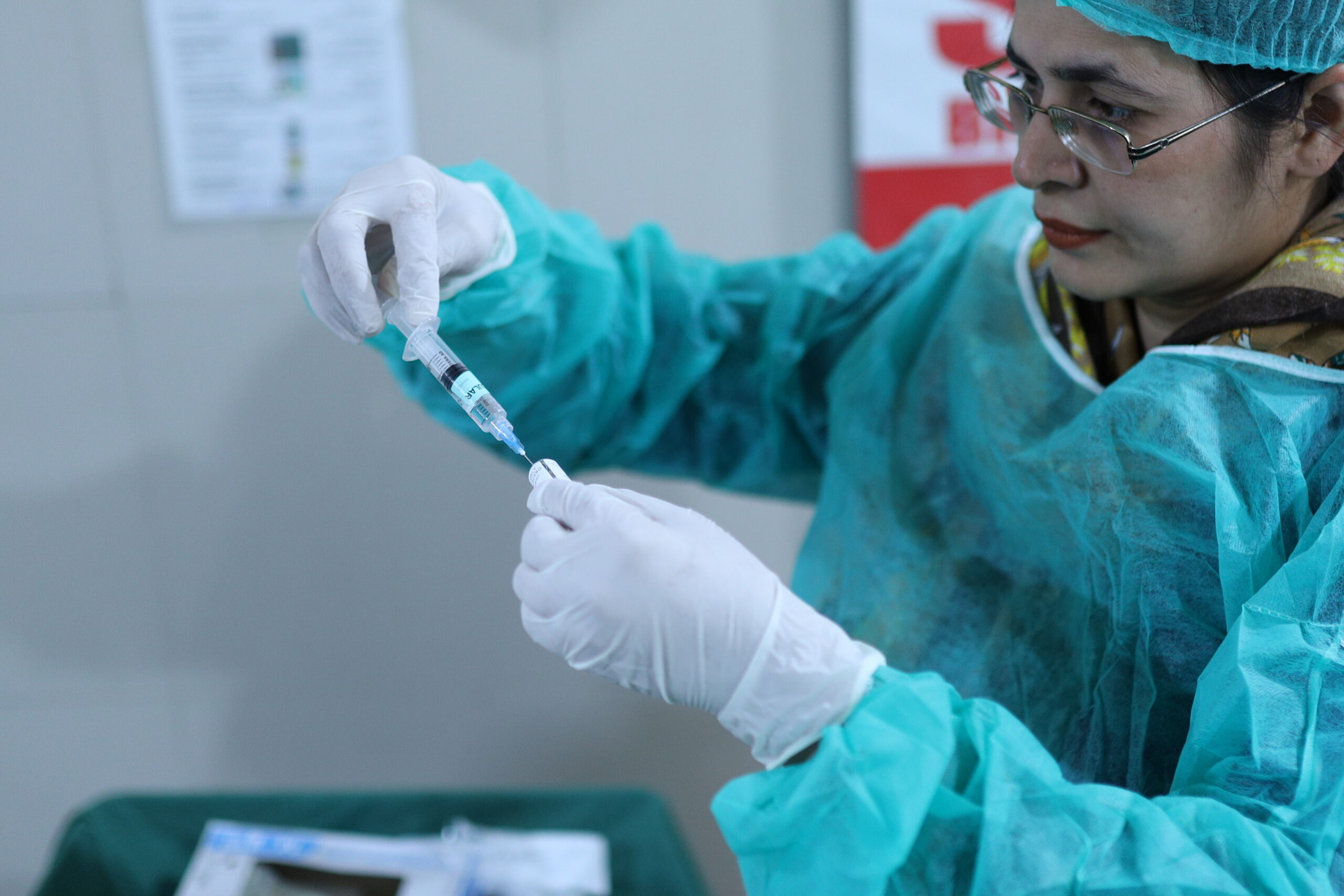
Doctor wearing a protective apron and gloves holds a syringe into a vial of medicine. Credit: Sheikh Khurram
What the evidence shows
TXA could save thousands of women’s lives every year
The team leading the WOMAN Trials published research in March 2026 showing that 10,000 women’s lives could be saved every year if women experiencing postpartum haemorrhage were given TXA.
By estimating the number of deaths that could be prevented through TXA treatment, the study found that the intervention is beneficial and cost-effective across several countries.
However, in many of these countries, TXA remains unaffordable despite its life-saving benefits.
Although some countries pay far less than US$4.45 per dose, even these lower prices can be prohibitively expensive for health systems seeking to provide TXA to every woman who needs it.
*The price of TXA listed in the presentation by Jhpiego in breaking down barriers: How to make TXA affordable & available to women diagnosed with PPH uses US$. WOMAN Trials data used INT$, which adjust for purchasing power and represents what the US dollar could buy in the United States in 2021.
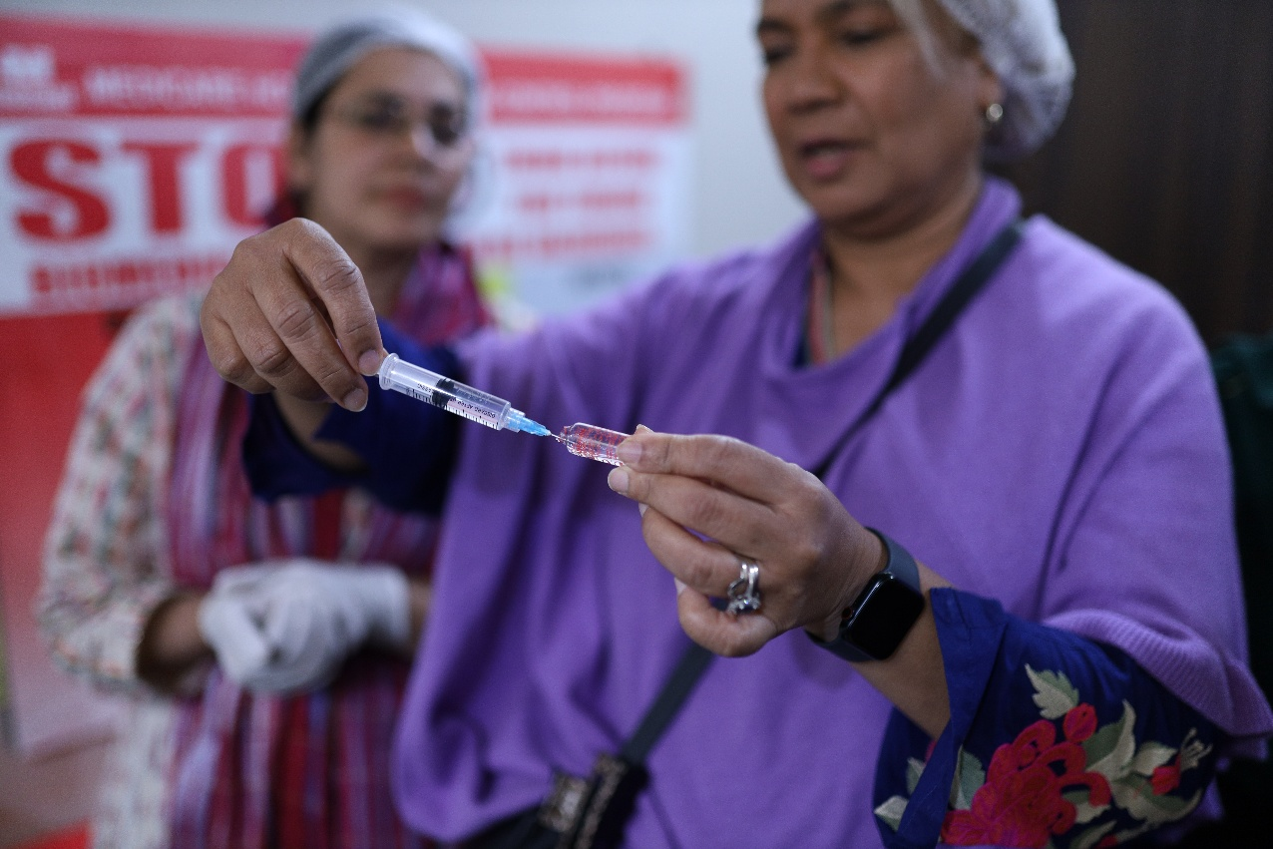
Professor Haleema Shakur-Still prepares a syringe of TXA. Credit: Sheikh Khurram © / LSHTM
Quality-assured TXA can cost more
Unfortunately, poor quality medicines are prevalent in low-and middle-income countries (LMICs). In one study, six of 14 TXA samples failed the testing for active ingredients, related substances, or both.
Naoko Doi, Market Access Team Lead at Jhpiego, said: “The scariest consequence of using substandard or falsified TXA is that it won’t stop the bleeding.”
Quality-assured TXA refers to products that meet internationally recognised standards for safety, efficacy and quality. This includes products approved by Stringent Regulatory Authorities (SRAs) or authorities recognised by the WHO as WHO-Listed Authorities (WLAs).
The challenge is that obtaining these additional approvals can sometimes make a product more expensive.
For example, research conducted by the Accelerating Measurable Progress and Leveraging Investments for PPH Impact (AMPLI-PPHI) project in the DRC found that health facilities paid between US$2.24 and US$2.90 for TXA products with both national approval and approval from a Stringent Regulatory Authority (SRA). Products with national approval only cost between US$0.53 and US$1.87.
However, price alone is not an indicator of quality. Determining whether a medicine meets internationally recognised standards for safety, efficacy and quality is not always straightforward.
A medicine approved by a country’s national medicines regulator is authorised for use in that country. However, national regulatory authorities differ in their levels of maturity* and their capacity to assess and monitor medicines. Some regulators are still developing the capacity needed to meet international standards.
* WHO Global Benchmarking Tools (GBT) for evaluation of national regulatory systems

“The answer is not to lower quality standards. It is to find ways to make affordable, high-quality medicines available by increasing the number of manufacturers supplying the LMIC market with quality-assured products.
“We can support this by helping national regulatory agencies strengthen their capacity and progress to higher levels of regulatory maturity, so that approval by a national regulatory authority becomes a recognised indicator of quality,” said Doi.
Next week, we will publish our article on three solutions to make TXA more affordable and accessible.
Read our October newsletter to learn more about the WOMAN Trials news and research.
Subscribe to our bimonthly maternal health research newsletter.