
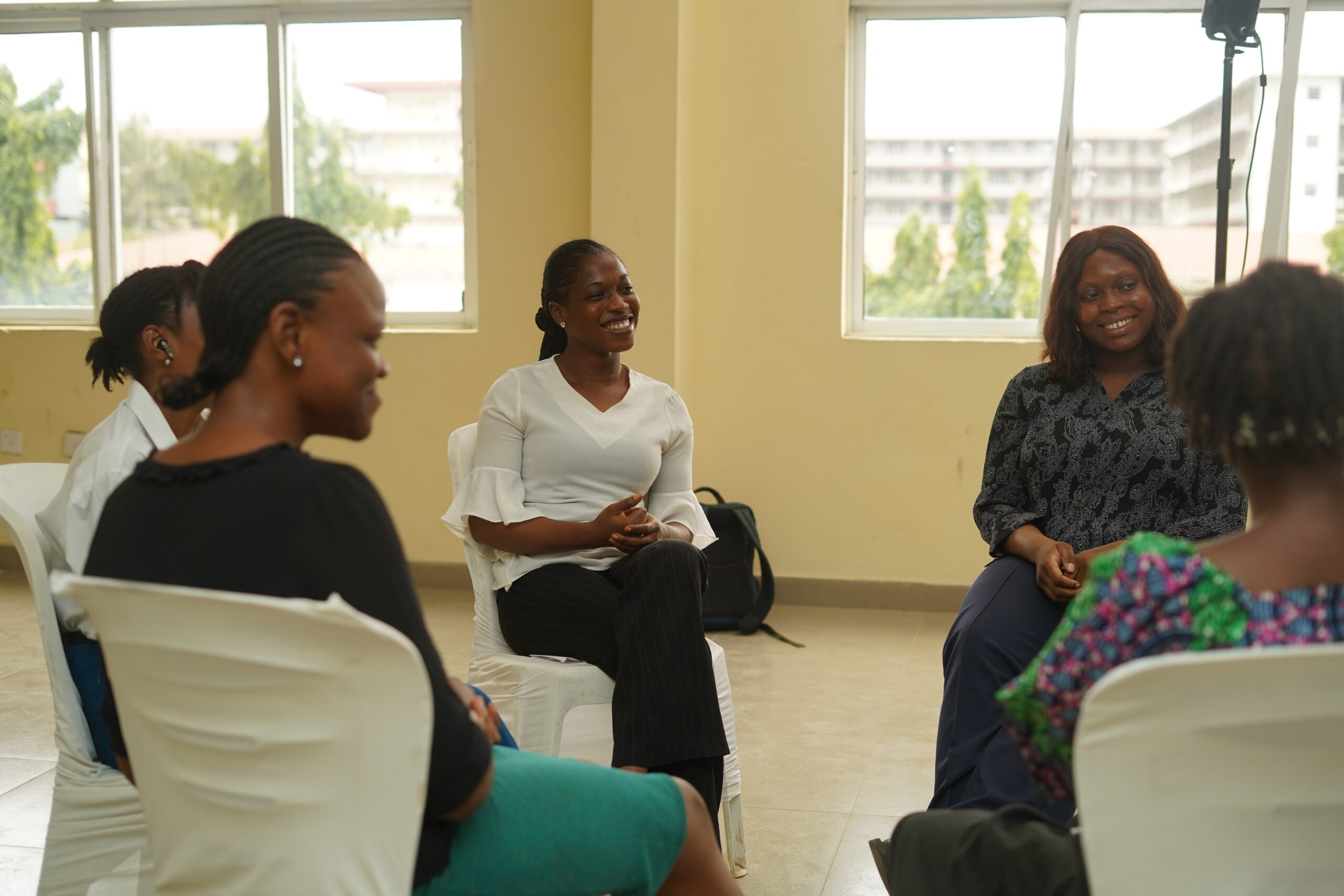
Medical students in Nigeria discuss anaemia with Professor Nike Bello.
Recruitment has begun in Ibadan for the WOMAN-3 Trial, a major international study investigating whether a widely available medicine can help prevent and reduce anaemia in young women.
The trial builds on findings from the WOMAN-2 Trial, which revealed the serious impact of anaemia during pregnancy and showed that women who enter pregnancy with anaemia face a substantially higher risk of severe bleeding and other life-threatening complications during childbirth. The findings reinforced the need to identify and treat anaemia before pregnancy begins, prompting researchers to launch WOMAN-3.
The new study will assess whether tranexamic acid (TXA), a drug commonly used to reduce heavy menstrual bleeding, can reduce anaemia when given alongside standard iron and vitamin supplementation. Researchers hope the trial will provide a new approach to tackling a condition that affects hundreds of millions of women worldwide.
Anaemia occurs when there are too few healthy red blood cells to carry oxygen around the body. Among women of reproductive age, menstrual bleeding is a major cause. In Nigeria, the burden is particularly high. A 2023 study in Lagos found that almost 40% of women were anaemic.
The condition is often overlooked because its symptoms can resemble the pressures of everyday life. Persistent tiredness, difficulty concentrating, headaches, breathlessness and heart palpitations may all be signs of anaemia. However, the consequences can be serious, affecting education, employment, fertility, and overall quality of life. During pregnancy, anaemia significantly increases the risk of complications for both mothers and babies.
The trial team began screening medical students for anaemia at the end of June. Among the first group of more than 30 students screened, more than two-thirds were found to be anaemic, highlighting the scale of the problem among young women.
Professor Nike Bello, co-lead of the trial and obstetrician at University College Hospital Ibadan, said the research aims to improve women’s health long before pregnancy begins.
“The objective of WOMAN-3 is to prevent anaemia before women even get pregnant,” she said. “If women enter pregnancy with healthy blood levels, they are less likely to suffer severe bleeding or die from complications during childbirth.”
Professor Oladapo Olayemi, co-lead investigator in Nigeria and also based at UCH Ibadan, said the study focuses on women of reproductive age because menstrual blood loss is an often-overlooked contributor to anaemia.
“Every organ in the body depends on oxygen carried by the blood,” he said. “When the blood cannot carry enough oxygen, virtually any organ can be affected. That’s why anaemia can mimic many other illnesses.”
He added that the trial is currently recruiting participants in Ibadan, with plans to expand to other parts of Nigeria.
The WOMAN-3 Trial is a randomised, placebo-controlled study coordinated by LSHTM and taking place in Nigeria, Pakistan and Tanzania. By investigating whether reducing menstrual blood loss can improve anaemia, the trial aims to address a root cause of the condition and help more women enter pregnancy with healthy blood levels, improving outcomes for mothers and babies alike.