
Anaemia may be the hidden factor driving global maternal deaths, according to a new report published today, titled “The missing evidence: anaemia, postpartum bleeding and maternal death”.
Maternal mortality remains one of the most pressing challenges in global health. Although efforts over the past decades have reduced death rates, progress has slowed – particularly in sub-Saharan Africa and South Asia, where most maternal deaths occur.
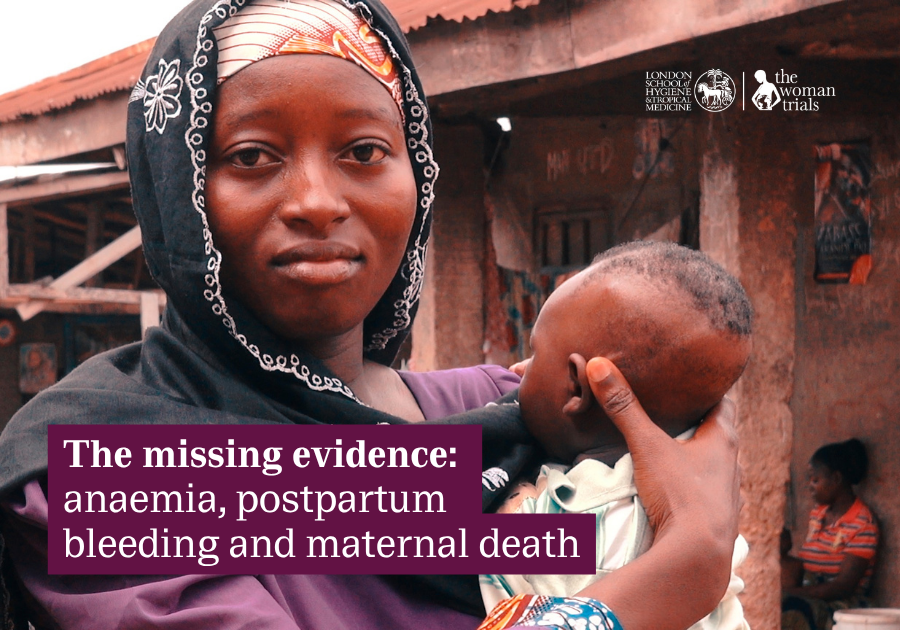
Based on data from the WOMAN-2 study – a large international trial involving more than 15,000 women – the report findings point to anaemia as a critical but overlooked contributor to severe postpartum haemorrhage (PPH), which is generally reported as the leading cause of maternal death globally.
The trial focused on women with moderate or severe anaemia giving birth in four countries: Nigeria, Tanzania, Zambia and Pakistan. The corresponding report presents data and analysis from several papers published in The Lancet Global Health over the last few months.
The research was conducted by an international team of obstetricians, midwives, academics, and scientists, and coordinated by the Clinical Trials Unit at the London School of Hygiene & Tropical Medicine.
The missing data for maternal health
The report reveals that anaemia could be responsible for half of severe postpartum haemorrhage cases in sub-Saharan Africa and South Asia – regions where up to half of all pregnant women are anaemic. Despite this, anaemia receives relatively little attention in guidelines or public health programmes aimed at preventing or treating postpartum bleeding and maternal death.
Professor Ian Roberts, who co-led the WOMAN-2 study, said:
“Excessive bleeding after childbirth affects women everywhere, but almost all the resulting deaths occur in places where anaemia is highly prevalent.
“This report challenges the traditional view that PPH itself is the main cause of maternal deaths. Instead, it suggests that it is anaemia and other issues it causes – heart palpitations, organ failure, shock, life-altering surgery – that put women and their babies at the greatest risk.
“More needs to be done to screen all women of reproductive age for anaemia. Only then will we start to get closer to the SDG target of reducing maternal deaths.”
Current definition of postpartum haemorrhage puts women with anaemia at risk
The report highlights that the current definition of postpartum haemorrhage fails to accurately identify many women at risk. The WHO has recently redefined PPH as a blood loss of 300 ml or more within 24 hours of birth, down from 500 ml. However, women with anaemia can experience extremely modest bleeding after childbirth and still develop shock and organ failure. Conversely, many women in high-income countries can lose upwards of one litre of blood with few consequences.
There is currently no established PPH definition for women with anaemia. According to the data, a quarter of women who die or nearly die from PPH are not identified using the current clinical definition. This gap in diagnosis means that some of the most vulnerable women – particularly those with anaemia – are not receiving the care they need in time.
Dr Francois-Xavier Ageron, from Lausanne University Hospital and a lead author of one of the published papers, said:
“Current prognostic models for PPH are based on measuring blood loss. We have developed the first model to look at the outcomes that matter to women, which are death and near-miss. We found that anaemia is a major prognostic factor.”
“Using anaemia as a risk predictor means that women could be given lifesaving treatments, such as tranexamic acid (TXA) – a drug commonly used to reduce bleeding – earlier and be monitored more closely by midwives, which would ultimately save lives.”
Anaemia’s toll on mothers and babies
The WOMAN-2 study shows that women with severe anaemia are seven times more likely to die or nearly die during childbirth. They are also three times more likely to have a stillbirth compared to women with moderate anaemia.
The risks also increase when interventions like episiotomy (a surgical cut made during childbirth) are involved. Anaemic women who underwent such a procedure were almost twice as likely to be diagnosed with a clinical PPH.
Beyond the immediate risks, anaemia has serious impacts on women’s quality of life. The report documents high levels of fatigue, dizziness, difficulty concentrating and shortness of breath in women with moderate to severe anaemia. Many women leave hospital with even lower haemoglobin levels than they had before delivery, increasing their long-term health risks.
Voices of women
The report includes personal accounts from women affected by anaemia and PPH. One such voice is Sana from Pakistan, a former research assistant and teacher, who was anaemic during her first pregnancy in 2018.
Sana said: “I was always feeling numb, I was tired, I couldn’t do much work. I didn’t take anaemia seriously. But I had a terrible experience because of anaemia – I had a postpartum haemorrhage. It’s very important because it will have life-long effects on your body, on your mental health and your physical health.”
A call for global action on anaemia
The report calls for urgent changes in both policy and practice. Professor Haleema Shakur-Still, co-lead of the WOMAN-2 study said:
“We can no longer accept women going into childbirth severely anaemic. We need to raise the profile of anaemia from something that women think is normal and benign to something urgent that has consequences like losing your baby, life-changing injuries or even death.
“Anaemia needs addressing through prevention, detection and treatment. This includes more funding for research and programmes, as well as changes in policies. Preventing anaemia in women and girls from when they start menstruating is much easier than trying to treat a women bleeding to death in a delivery room.”
A life-course approach to women’s health is needed
To reduce the number of maternal deaths worldwide, the report gives practical recommendations.
Tackling heavy menstrual bleeding as a cause and a symptom of anaemia could be one of them. Indeed, a further LSHTM-based trial – WOMAN-3 – will start recruiting soon to see if TXA, taken during menstruation, can reduce anaemia in women and girls.
Other work from the team focuses on engaging affected communities and providing women with information on PPH, the use of TXA and anaemia.
The report also suggests promoting better birth spacing, reducing the use of procedures such as episiotomy unless necessary, and treating other infections, such as malaria as other means of tackling anaemia in a joined-up manner.
Professor Nike Bello, an obstetrician at University Hospital Ibadan and National Coordinator of the WOMAN-2 study in Nigeria, believes the findings must spur change at the government level. She said:
“We hope the findings can help clinicians understand the importance of early screening and treatment of anaemia. Ministries of Health also need to take heed. Investing in a life-course approach to anaemia prevention, detection and treatment is an investment in a whole generation of healthy mothers and babies, which is priceless.”
Funding
The WOMAN-2 Trial is funded by the Bill & Melinda Gates Foundation (INV-007787) and the Wellcome Trust (WT208870/Z/17/Z).
Subscribe to our bimonthly maternal health research newsletter.