

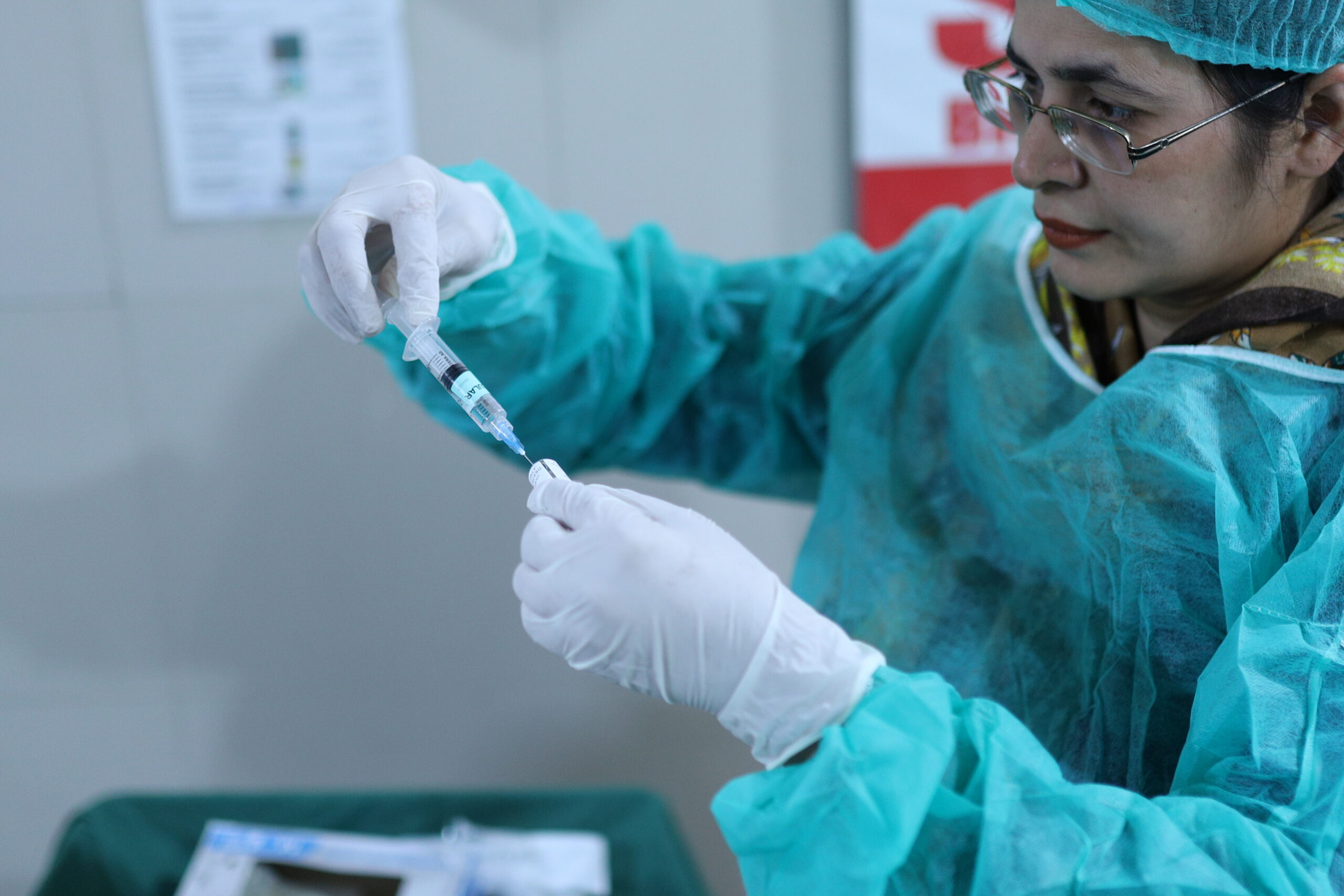
A clinician in Pakistan prepares to administer tranexamic acid.
A simple, inexpensive drug reduces surgical bleeding and blood transfusions, and could save lives. Yet in hospitals around the world, many patients who would benefit from it never receive it.
In a new article published in Transfusion Medicine, Professor Ian Roberts and Assistant Professor Katharine Ker at the London School of Hygiene & Tropical Medicine, argue that adding tranexamic acid (TXA) to every hospital’s safe surgical checklist is one of the simplest and most effective ways to improve patient outcomes and transfusion practice.
TXA works by preventing the breakdown of fibrin blood clots, helping the body stop bleeding. Developed by a husband-and-wife research team in Japan in the 1960s, the drug has gone on to demonstrate major benefits in surgery, trauma and bleeding after childbirth. Strong evidence shows that TXA substantially reduces surgical bleeding and blood transfusion and likely reduces surgical deaths as well.
Importantly, TXA is also highly cost-effective and safe. Longstanding concerns that it might increase the risk of blood clots have not been supported by the available evidence.
Given these advantages, why is TXA still underused?
The authors identify seven key barriers that continue to prevent wider adoption.
- Lack of incentives
Unlike many modern medicines, TXA is inexpensive and off-patent. No pharmaceutical company stands to make substantial profits from promoting its use. As a result, there is little commercial investment in raising awareness, supporting implementation, or encouraging uptake among clinicians.
- Lack of audit and feedback
When TXA is not given to eligible surgical patients, hospitals often have no system for monitoring or reporting this gap. Without routine audit and feedback, missed opportunities remain invisible, and progress stalls.
- Lack of leadership
In many healthcare settings, no individual or department is accountable for ensuring that TXA is used according to evidence-based recommendations. Without clear leadership, implementation can fall between professional and organisational boundaries.
- Lack of patient advocacy
Most patients would prefer to avoid a blood transfusion if a safe and effective alternative is available. However, many are never informed about TXA before surgery. As a result, patients are unable to ask for a treatment that could reduce their risk of bleeding and transfusion.
- Lack of training and education
Although evidence supporting TXA has grown considerably over the past two decades, some clinical attitudes have not kept pace. Outdated beliefs about its effectiveness or safety continue to have an influence on practice. Improved education and updated training are essential to ensure that decisions reflect current evidence.
- Overconfidence in blood safety
Blood transfusions save lives and remain an essential part of modern healthcare. However, transfusions also carry risks and costs. Clinicians may underestimate these risks and not fully appreciate that preventing bleeding with TXA is often safer than treating bleeding with a transfusion.
- Perverse incentives that favour transfusion
Although blood donation is voluntary, hospitals pay for the processing and supply of blood products. Existing systems and funding arrangements may unintentionally reinforce transfusion-based approaches rather than prioritising interventions that prevent bleeding in the first place.
A simple step with global impact
Despite being included in NICE guidance since 2016, around one quarter of UK surgical patients who should receive TXA still do not. Similar patterns exist in other countries, resulting in avoidable bleeding, unnecessary transfusions, and additional healthcare costs.
The issue has also attracted national attention. The UK Infected Blood Inquiry, published in 2024, specifically recommended greater use of TXA to reduce avoidable transfusions, including its addition to surgical checklists alongside regular audit and reporting.
Including TXA on the safe surgical checklist in every hospital would help ensure that a proven, relatively low-cost drug is administered to the patients who need it.
As health systems are looking for better outcomes and efficiency, this could be one of the simplest and most impactful changes available.