
On 13 May 2026, the World Health Organization (WHO) published its latest World Health Statistics report on progress toward meeting global health Sustainable Development Goals (SDGs).
The latest WHO figures show that progress on maternal mortality and anaemia, respectively, has stalled since 2015.
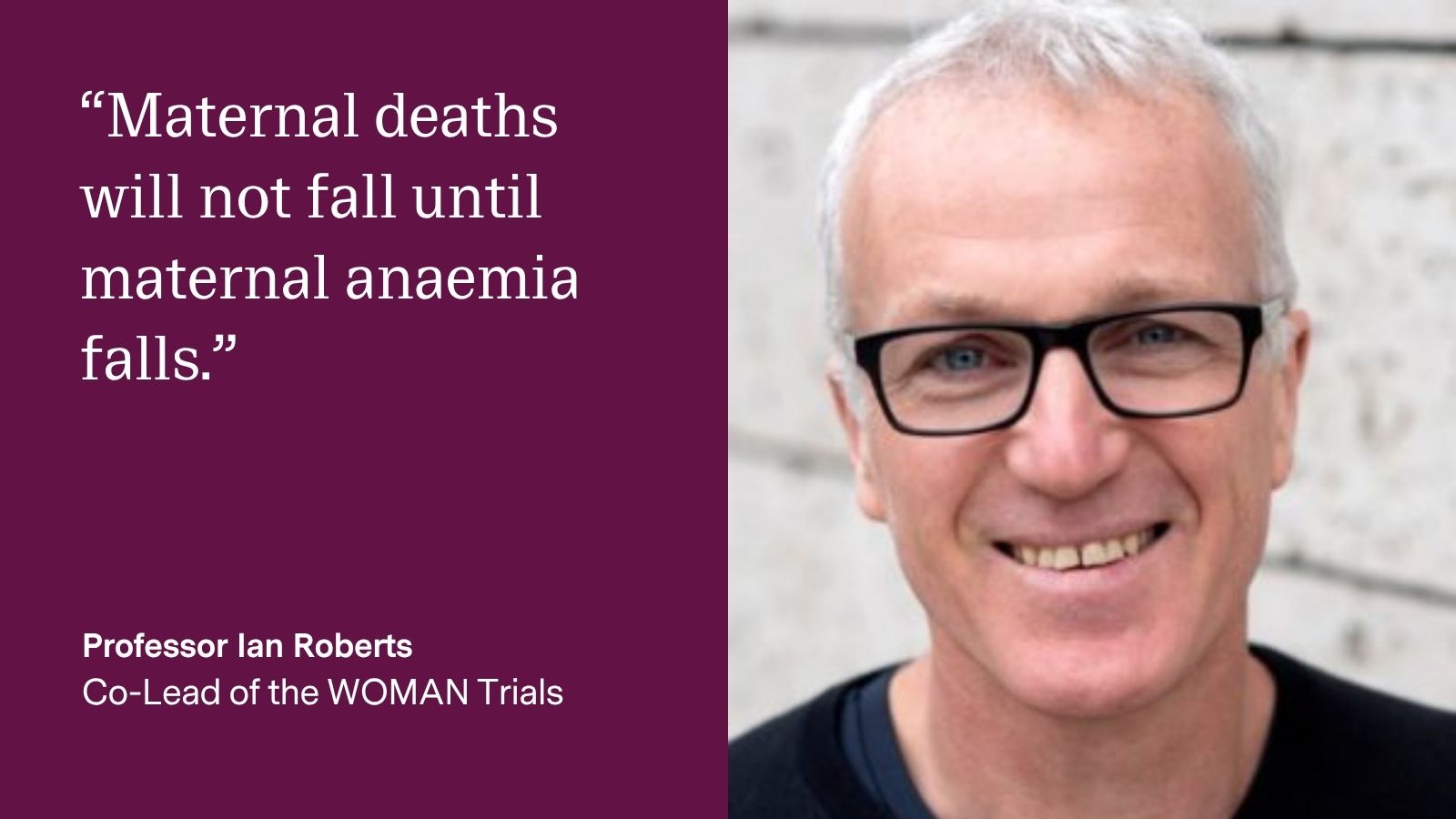
Professor Ian Roberts, Co-lead of the WOMAN Trials, said: “We now have strong evidence that maternal deaths and anaemia are closely linked.
“Among pregnant women, more than one in three are anaemic. The new figures show the world remains off track from its target of halving anaemia by 2030.”
In 2023, there were still 712 maternal deaths every day worldwide, while global anaemia prevalence in women of reproductive age increased from 27.6% to 30.7%.
More than 605 million women aged 15–49 were living with anaemia — up from 506 million in 2012.
Roberts added: “Our new evidence shows that anaemia is killing mothers – there will be no progress in maternal health without tackling anaemia.
“Women are too often diagnosed with postpartum haemorrhage when it is already too late. Anaemia leaves them unable to survive even moderate amounts of blood loss during childbirth.
“The research in our new missing evidence report suggests anaemia is not just a nutritional risk factor, but an overlooked driver of maternal deaths.”
“Anaemia leaves women vulnerable before pregnancy, so prevention must start earlier. Therefore, we need a life-course approach to prevent, detect and treat anaemia.
“The world can start by taking heavy menstrual bleeding, iron deficiency and anaemia seriously in adolescence and reproductive years – alongside improving nutrition.
“Our upcoming WOMAN-3 Trial will test whether treating anaemia in young women by giving them tranexamic acid tablets, iron and replacing lost vitamins, can prevent maternal deaths in childbirth.”
The missing evidence report reveals that anaemia could be responsible for half of severe postpartum haemorrhage cases in sub-Saharan Africa and South Asia – regions where up to half of all pregnant women are anaemic.
Find out more about the WOMAN-3 Trial.